
 Wishlist
 Sign In

 FREE delivery over £500*
 Price Match Promise
 Finance options available*
 Rated Excellent on Trustpilot
How to Seal a Bath: A Complete Guide to a Leak-Free Finish
25th Nov 2025
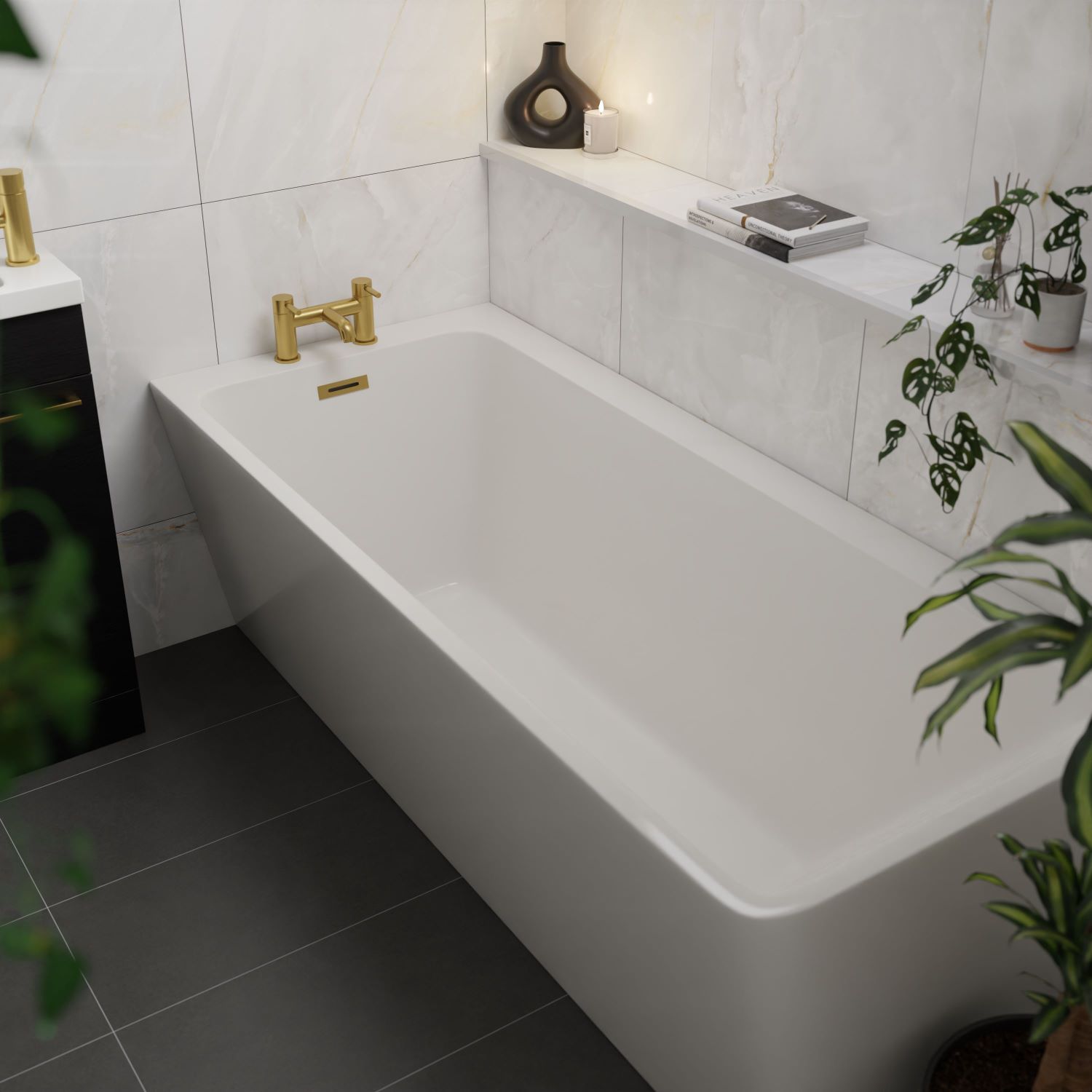
If you've noticed puddles on your bathroom floor after a bath or damp patches creeping along the wall near the tub, it's probably time to reseal. The good news is that this is much easier to do than you might think and could save you a small fortune compared to calling a plumber.
In this guide, we'll cover how to remove and restore your bath sealant, with expert tips from Brian Toward, CEO here at Wholesale Domestic, to help you get professional-looking results.
Contents:
- Why do you need to seal a bath?
- What you’ll need
- How to remove bath sealant
- How to seal a bath with silicone
- How to seal a bath with a large gap
- How to seal a shower screen over a bath
- How to seal a bath with sealing tape
- Common mistakes to avoid
- Frequently asked questions
Why do you need to seal a bath?
Nothing beats running the perfect bath, but a leak can dampen your relaxation.
A proper seal around your bath isn't just about making things look neat – it's doing important structural work behind the scenes. Without it, water can seep behind your bath, leading to damaged floors, rotting support beams, ruined walls, and repair bills.
A failing seal is also an invitation for mould and damp to make themselves at home around the edge of your bathtub. This not only makes your bathroom look dirty, even if you're regularly deep cleaning, but it can also create an unhealthy environment where you could be breathing in mould spores.
Resealing your bath is a quick way to refresh a tired-looking bathroom without spending much money. Keep an eye out for these telltale signs: the sealant has gone discoloured or yellowed, it's starting to peel away from the bath or tiles, you can see visible mould growing on it, or you've noticed any leaks or damp patches nearby. If you spot any of these, it's time to remove the old sealant and replace it with a fresh coat.
What you'll need
The right tools make all the difference when it comes to getting a firm seal around your tub. The good news is you've probably got most of the tools you need lying around already, and anything you're missing is fairly cheap to pick up.
Here's what you'll need:
- Bathroom-grade silicone sealant – Just make sure it's mould-resistant
- Caulking gun – For applying the sealant
- Masking tape – To keep your lines neat
- Sharp craft knife or Stanley knife – For removing old sealant
- Scraper tool or flat-head screwdriver – To lift old sealant
- Safety gloves and glasses – To protect yourself from sealant debris
- Sealant smoothing tool – Alternatively, you can use an ice cube or a wet finger
- Clean cloths – For wiping up any excess sealant
- White spirit – For removing stubborn old sealant
If you're not keen on messing around with silicone, you might prefer flexible sealing tape as an alternative. We'll cover how to use that later.
How to remove bath sealant
Before applying the new sealant, you'll need to remove all the old stuff. While it can be tempting to add a new layer over what's already in place, this step is crucial; new sealant just won't stick properly to old sealant, no matter how good the product is. If you skip or rush the removal process, you might have to do the whole job again in a few months.
Here's how to remove old sealant properly:
- Score along both edges - Take your craft knife and carefully run it along both edges of the old sealant, where it meets the bath and the tiles or wall. This breaks the seal and makes it much easier to remove.
- Lift it away - Use a scraper or flat-head screwdriver to carefully lift the old sealant away from the bath and wall surface. Take your time with this bit; you don't want to leave behind any scratches.
- Remove the residue - Once the bulk of the sealant is gone, you may have some sticky bits left behind. Try rubbing these away with your fingers first (wearing gloves).
- Use white spirit for stubborn bits - If there are any really stubborn residues still clinging on, dab some white spirit onto a clean cloth and rub them away.
- Clean thoroughly - Give the whole area a good clean with a cloth dipped in warm, soapy water to remove any grease or dirt.
- Let it dry completely - This is important, as the surface needs to be completely dry before you apply new sealant. Leave it overnight if you can.
"Removing your old sealant is probably the most tedious part of the whole job, but it's worth taking your time to make sure it's done right the first time," says Brian.
"If you rush this stage, you might find your new sealant peeling off after a few weeks because it hasn't managed to get a good bond with the bath surface, thanks to the old sealant. Get every last bit of the old stuff off, make sure everything's clean and dry, and you'll have a seal that lasts."
How to seal a bath with silicone in 7 steps
This is the most common way to seal your bath, and once you've got the hang of it, you'll wonder why you ever considered paying someone else to do it. We've broken the process down into seven easy-to-follow steps:
1. Fill your bath with water
Fill your bath up to a normal level. This might seem like an odd first step, but there's solid reasoning behind it; when your bath's full (especially when you get in it), the weight causes the bath to settle slightly. If you seal it while it's empty, that settling motion will crack your new seal the first time you use it. Filling the bath first means the sealant can flex naturally under the weight without breaking. Don't empty the water until the sealant's completely set.
"This is the step that trips up most people," explains Brian. "The weight of the water – and a person – can cause the bath to drop by a few millimetres, which is enough to split the seal. Fill it first, and you're working with the bath in its natural position. It's a simple trick that saves you from going through the whole process again."
2. Tape off the edges
Now that your bath is full, it's time to mark where your sealant's going to go. Take your masking tape and apply it on both sides of the joint (one strip on the bath rim, and one strip on the tiles or wall panel above it). Leave a gap of about 3-5mm between the tape lines. This will determine the width of the sealant bead.
3. Prepare your sealant
Take your silicone tube and cut the nozzle tip at a 45-degree angle – this makes it much easier to get the sealant right into the corner.
Load the tube into your caulking gun following the manufacturer's instructions (most models have a release lever at the back that lets you pull the plunger out).
Once it's loaded, give it a test squeeze on some scrap cardboard to get to grips with how much pressure is needed – it's better to waste a tiny bit of sealant than to start on the actual bath and make a mess.
Brian adds: "The nozzle size makes a big difference. For most standard gaps, you want a hole about 3-4mm across. If you're dealing with slightly larger gaps, you can cut it a bit bigger, but be careful not to do too much – it's easier to add more sealant than to clean up excess. You can always make the hole bigger if you need to, but you can't make it smaller."
4. Apply the sealant
This is where everything comes together. Start at the back corner and get as close as possible to the joint, gently squeezing the trigger on your caulking gun and moving along the edge in one continuous motion.
Keep the pressure as even as you can – you're aiming for a consistent bead of sealant all the way along, and try not to stop midway, as this can create lumps or weak spots. Work your way around the tub, applying sealant to the bath rim and the wall surface for the strongest possible seal.
When you're sealing a bath up against tiles, the indented grout line can lead to weak spots where the sealant doesn’t lay flat against the entire surface. To avoid this, angle the gun so you're filling any gaps between the grouting lines and the bath rim properly, rather than just sitting sealant on top of it.
5. Smooth the finish
As soon as you've applied the sealant, you need to smooth it out before it starts to skin over. This is where your smoothing tool, ice cube, or wet finger comes in. Run it along the sealant in the same direction you applied it, pressing gently to push it right into the corner and create a neat, angled finish.
The angle's also important here. You want the sealant sloping from the wall down to the bath so that water runs back into the tub rather than sitting on top of the seal.
6. Remove tape and clean up
Once you've smoothed the sealant, you've got about 10-15 minutes before it starts to skin over. This is your window to remove the masking tape - do it too late, and you'll pull the sealant away with it; do it too early, and the sealant might slump before it's had a chance to hold its shape.
"Timing's everything when it comes to removing the tape," Brian explains. "Give it about 10 minutes. This is just enough time for the sealant to hold its shape, but not so long that it's stuck to the tape.”
“If you're worried, do a gentle touch test on an inconspicuous part of the bath – if it's starting to feel tacky but your finger doesn't sink in, that's your moment. Remove the tape at an angle that's pulling away from the seal rather than towards it, so you're less likely to drag any sealant with you."
7. Let it cure
Leave your bath (with the water still in it) for at least 24 hours before you use it. Check the instructions on your particular sealant, as curing times can vary.
Keep your bathroom well-ventilated to help the curing process along. You might find the sealant feels dry to the touch after just a few hours, but that doesn't mean it's fully cured - it needs that full time to develop its strength and water resistance.
How to seal a bath with a large gap
Sometimes, a bathtub doesn't fit as flush against the wall as we might like. If there's a large gap (anything over 5-6mm) between your bath and wall, standard silicone alone won't create a fully watertight seal; it'll sag and crack.
Here's what to do instead:
Option A: Re-seat the bath
This is the most thorough solution, but it requires a bit more work. You'll need to disconnect the plumbing, move the bath closer to the wall, reconnect everything, and then seal the joint as normal.
It's worth the effort if you're dealing with a really large gap and feel confident with basic plumbing, or if you're already doing other bathroom work. However, for most people dealing with gaps under 5mm, the workload likely isn't worth it, and another option might be the better choice.
Option B: Use backer rod or foam
Backer rod is a flexible foam cord that comes in different diameters. You push it into the gap before applying your silicone over the top, which gives the sealant something solid to grip onto and stops it from sagging into the gap.
Choose a backer rod that's slightly wider than your gap – you want it to compress slightly so it stays put. Push into the gap with your fingers until it's sitting about 3-4mm below where you want the silicone to be. Then seal over the top following the steps in the previous section.
Option C: Install bath trim
Quadrant trim strips are plastic or metal strips that cover the gap between a wall and your bathtub, giving you a neat, professional-looking finish. They're sealed with silicone on both the top and bottom edges, so there's no need to worry about leaks.
Measure the length of your bath edges, cut the trim to size, and stick it in place with silicone on the wall and bath side. This creates a waterproof barrier that covers fairly large gaps. The downside is it's more permanent. If you change your mind or it gets damaged, you'll need to remove it completely.
How to seal a shower screen over a bath
Shower screens need extra attention as they're exposed to more water pressure and spray than a standard bath. Getting the seal right here is crucial to avoid leaks.
Here's how to seal your shower screen properly:
1. Identify all seal points
Shower screens have multiple places where water can get through if they're not sealed properly. Check the base channel where the screen meets the bath rim and the side channels where the screen meets the tiles or wall (if applicable). Both inside and outside edges of these channels need sealing.
2. Clean and prepare the channels
Remove any existing sealant from the channels using your craft knife and scraper – the same method for removing your bath sealant above. Allow the channels to dry before you start sealing.
3. Apply silicone to the base channel
Fill your bath (just like the standard method), then run a bead of silicone along the joint where the screen meets the bath rim. You'll need to do this on both the inside and outside edges of the screen.
4. Seal vertical edges
If your shower screen has side edges where it meets the wall or tiles, you'll need to seal these too. Apply a smaller bead than you used on the bath rim, as these vertical seals don't need to be quite as chunky. Smooth out carefully to avoid visible lumps, as vertical seals tend to be more noticeable.
5. Cure and test
Leave it for 48 hours before you use the shower - even longer if possible. When you do use it for the first time, start with low water pressure and check carefully for any leaks.
"Always test your shower screen seal with low pressure first," Brian advises. "If there's a weak spot, you'll find it much quicker with a gentle flow than by blasting it with the shower at full power and flooding your bathroom.”
“Run the shower gently for a few minutes, then check all around the base and sides, both inside and outside. If you see even a tiny bit of water where it shouldn't be, let everything dry out completely, then add more sealant to that spot."
How to seal a bath with sealing tape
If you're looking for a faster option or don't want to deal with the mess that can sometimes come with silicone sealant, self-adhesive sealing tape could be your answer. This is a waterproof tape, made from either PVC or PE (polyethene) plastic.
While it’s a quicker alternative to standard sealant, it’s also not as long-lasting; you're looking at 6-12 months rather than 12-24 months with silicone.
The benefit is that, since it’s so easy to install, replacing worn-down tape only takes a few minutes.
Here's how to apply sealing tape:
1. Prepare the surface
This step is vital with sealing tape – the surface needs to be completely clean, dry, and grease-free, or the adhesive won't stick. Remove any old sealant using the same method we covered earlier, then give the area a thorough clean.
Any tiny bit of soap residue, limescale, or grease will stop the tape from adhering properly, so don't skip this step.
2. Measure and cut
Measure each section of your bath rim that needs sealing and cut the tape slightly longer than you need. You can always trim excess later, but you can't add more if you've cut it too short. If you're sealing multiple sides, measure and cut each piece separately rather than trying to do it all in one long strip.
3. Apply the tape
Start from one end and peel the backing paper away slowly as you go. Don't peel it all off at once, or the tape will stick to itself. Press the sealing tape firmly against the surface of the wall and bathtub, starting from one end and working your way along, smoothing out any bubbles as you go.
4. Trim and finish
Once the tape's applied, trim any excess at the corners with a sharp knife for a neat finish. Most sealing tapes recommend leaving them for 24 hours before using the bath, though some can be used immediately. Be sure to check the manufacturer's instructions.
Common mistakes to avoid
Sealing your bathtub is a surprisingly easy task once you know what you're doing, but there are a few pitfalls that can catch you out. Here are the most common mistakes to watch out for:
- Not removing all traces of old sealant – This is the big one. New sealant just won't stick to old stuff properly. Take the time to get every last scrap of old sealant off.
- Sealing with an empty bath – Fill it first. An empty bath will settle when you add water and weight, cracking your lovely new seal.
- Using non-bathroom sealant – Not all silicone is created equal. Standard decorating sealant isn't designed for constant water exposure and will go mouldy quickly.
- Rushing the smoothing – You need to smooth the sealant immediately after applying it, while it's still workable, but it's vital to take your time to angle it in the right direction.
- Using the bath before it's cured – Feeling dry doesn't mean it's ready. Give it the full 24 hours (or whatever the manufacturer recommends) before using the bath.
- Not drying the surface properly – Silicone needs a completely dry surface to stick to. If there's any moisture lurking around, the seal won't bond properly.
"The two mistakes I see most often are people skipping the 'fill the bath first' step and not waiting long enough for the sealant to cure," says Brian. "Both seem like shortcuts that'll save time, but they'll cost you way more time in the long run when you have to remove the failed seal and start again."
Frequently asked questions
Should you fill a bath before sealing it?
Yes, absolutely – this is one of the most important steps in the whole process. Always fill your bath to your normal bathing level before you apply any sealant.
"This is hands down the most common mistake I see," says Brian. "People think they're saving time and money by sealing an empty bath, but they're actually guaranteeing they'll have to do the job again in a few weeks. Your bathtub moves downwards slightly when you add weight to it, which means that if the sealant's already set in the 'empty bath' position, that movement will crack it."
How long does bath sealant last?
This depends on how much use your bath gets and how good your bathroom ventilation is. If you've got a well-ventilated space that dries out quickly after use, your sealant will last longer. If your bathroom stays damp and steamy, you might find it deteriorates a bit faster.
"Quality bathroom silicone, when applied properly on clean, dry surfaces typically lasts 2-3 years," explains Brian. "Lifespan may be shorter in high-use baths or if exposed to harsh cleaning products.”
“The enemies of bath sealant are constant moisture, poor ventilation, and mould. If you can keep your bathroom well-ventilated, like cracking a window open after baths and showers and using an extractor fan, your sealant will thank you for it.”
“If you spot mould starting to grow on the sealant, that's your cue to replace it. Once mould gets established, it'll keep coming back and the sealant will deteriorate faster."
How long does bath sealant take to dry?
Silicone sealant usually takes 24-48 hours to fully cure, though you might notice it feels dry to the touch after just a few hours. Don't be fooled by this – feeling dry and being fully cured are two very different things.
"The 'touch dry' time and the 'fully cured' time are very different things, and this is where people get caught out. After 4-6 hours, your sealant might feel dry if you gently touch it, but inside, it's still soft and hasn't developed its water resistance yet. Use the bath too soon, and you'll damage the seal before it has a chance to be properly set. My advice is always to wait the full 24 hours," Brian says.
Do I need to seal all sides of the bath?
You should seal any edge where your bath meets tiles or walls. Most straight baths are fitted against one long wall and one short wall, so you'd seal those two edges, while some corner baths are fitted into alcoves, so you might have three sides to seal.
Freestanding baths don't require sealing as they don't sit against walls – they're designed to stand alone with all edges exposed.
Refresh your bath setup with Wholesale Domestic
Sealing your bath looks harder than it is. With proper preparation and curing time, you'll get professional-looking results that'll save your walls and floors from water damage and hefty plumber call-out fees. However, if you’re unsure or don’t feel confident, always hire a professional, as improper sealing can cause leaks and costly repairs down the line.
Whether you're resealing an existing tub or fitting a new setup, shop everything you need at Wholesale Domestic – from bathroom-grade silicone sealant to a stunning range of baths, bath panels, and taps to complete your bathroom refresh.
Need advice on setting up your bath? Contact us today. Or, for more bathroom inspiration and DIY guides, see our blog.