
 Track Order
 Wishlist
 Sign In

 FREE delivery over £500*
 Price Match Promise
 Finance options available*
 Rated Excellent on Trustpilot
The Hidden Cost of Hard Water: The UK Cities Spending the Most Time and Money Cleaning Bathroom Limescale
25th Aug 2026
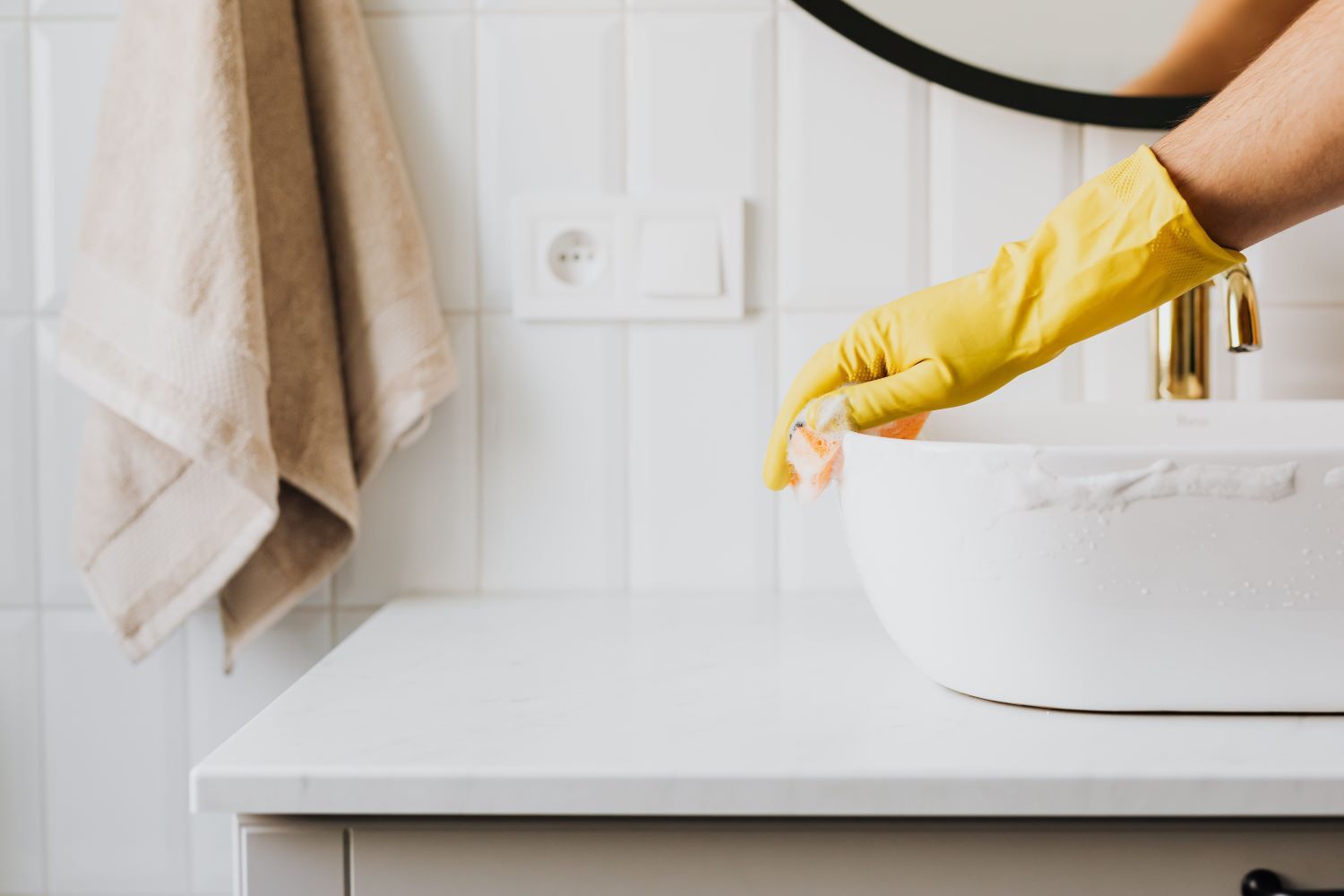
The effects of hard water are one of the UK’s most overlooked household expenses. While limescale on taps, shower screens, and toilets is a familiar sight, few of us consider how much extra time and money we spend tackling it each year.
And it’s a growing frustration. Our research shows online searches for limescale-related terms have continued to rise, suggesting households across the UK are increasingly looking for ways to tackle hard water.
To uncover the true cost, we analysed water hardness and household spending data across 10 of the UK’s largest cities. Here are our findings at a glance:
- The City of London, with ‘very hard’ water, has the highest estimated annual cleaning spend, at £202.80 per household, compared with £156 in Glasgow (‘very soft’ water).
- The City of London residents could spend almost eight extra hours cleaning their bathrooms each year compared with those in ‘very soft’ water areas.
Brian Toward, CEO at Wholesale Domestic, says: “Limescale is often seen as a minor inconvenience, but when you put figures against it, the cost in both time and money is much more than many people realise. We wanted to move beyond generic cleaning tips and reveal the wider impact of limescale, showing which parts of the country are paying the highest price for their water supply, and by how much.”
Contents
- Which UK cities spend the most on cleaning their bathrooms?
- The hidden cost of hard water
- Britain's growing frustration with limescale
- How to tackle limescale at home
- Methodology
Which UK cities spend the most on cleaning their bathrooms?
When it comes to keeping the bathroom clean, the costs can quickly add up. According to 2026 ONS data, UK households spend an average of £13 a month on cleaning products, adding up to £156 a year. We also spend around 30 minutes a week cleaning our bathrooms. However, where you live in the UK could make a big difference, depending on the hardness of your local water supply.
Hard water contains naturally occurring calcium and magnesium, which are left behind as limescale when water evaporates. Over time, this can build up on shower glass, taps, shower heads, tiles, toilets, and grout, often trapping soap scum and everyday dirt along the way. Naturally, the more limescale there is to tackle, the more time and cleaning products you may need.
So, to compare cities more fairly, we developed a conservative stepped model based on local water hardness classifications. The model is based on the logic that harder water leads to more frequent and intensive cleaning, increasing both the time taken to clean and the amount spent on products. Using ‘very soft’ water as the baseline, we applied a 5% increase for ‘soft’ water areas, 15% for ‘moderately hard’ water and 30% for ’very hard’ water.
Let’s take a look:
| City | Hardness Metric | Extra Cleaning Time & Spend | Estimated Annual Spend On Cleaning Supplies Per Household | Extra Time Spent Cleaning Per Year | Total Time Spent Cleaning Per Year |
| City of London | Very hard | Plus 30% | £202.80 | 7 hours 48 minutes | 33 hours 48 minutes |
| Birmingham | Soft | Plus 5% | £163.80 | 1 hour 18 minutes | 27 hours 18 minutes |
| Manchester | Soft | Plus 5% | £163.80 | 1 hour 18 minutes | 27 hours 18 minutes |
| Liverpool | Soft | Plus 5% | £163.80 | 1 hour 18 minutes | 27 hours 18 minutes |
| Leeds | Soft | Plus 5% | £163.80 | 1 hour 18 minutes | 27 hours 18 minutes |
| Glasgow | Very soft | 0 | £156.00 | 0 | 26 hours |
| Newcastle Upon Tyne | Soft | Plus 5% | £163.80 | 1 hour 18 minutes | 27 hours 18 minutes |
| Nottingham | Moderately hard | Plus 15% | £179.40 | 3 hours 54 minutes | 29 hours 54 minutes |
| Bristol | Moderately hard | Plus 15% | £179.40 | 3 hours 54 minutes | 29 hours 54 minutes |
| Sheffield | Soft | Plus 5% | £163.80 | 1 hour 18 minutes | 27 hours 18 minutes |
City of London: Britain's limescale capital
The City of London tops our index, with its water supply classified as ‘very hard’. Households here are estimated to spend £202.80 a year on bathroom cleaning products and around 33 hours and 48 minutes scrubbing their space.
That’s nearly eight extra hours of cleaning compared with households in ‘very soft’ water areas – roughly the equivalent of a full working day! The cost adds up, too, with City of London households estimated to spend £46.80 more each year on cleaning products. That’s a 30% increase in annual cleaning costs purely thanks to their water supply.
With 4,914 households in the City of London, that works out at approximately £996,559 spent on cleaning supplies across the area each year.
Glasgow: The UK city escaping the limescale burden
Glasgow sits at the opposite end of our index and is the only city we analysed with ‘very soft’ water. Households here are estimated to spend £156 a year on cleaning products and around 26 hours cleaning their bathroom.
Compared with harder water areas, Glasgow households are cutting down on both cleaning time and costs simply because of their local water supply – a saving that can add up year after year.
With 285,693 households recorded in Glasgow, that still works out at approximately £44.6 million spent on cleaning supplies across the city each year.
Nottingham and Bristol: Nearly four extra hours of cleaning every year
Nottingham and Bristol both have ‘moderately hard’ water, with households estimated to spend £179.40 a year on bathroom cleaning products and around 29 hours and 54 minutes cleaning their bathrooms.
That’s just under four extra hours of cleaning each year compared with ‘very soft’ water areas like Glasgow. It adds up to almost an entire afternoon spent tackling limescale instead of doing something else.
Across the two cities, the costs still quickly add up. Bristol’s 191,638 households are estimated to spend around £34.4 million on cleaning products each year, while Nottingham’s 124,745 households spend approximately £22.4 million.
Birmingham, Manchester, Liverpool, Leeds, Newcastle upon Tyne, and Sheffield:
Small weekly differences add up
The majority of cities in our study fall into the ‘soft water’ category, including Birmingham, Manchester, Liverpool, Leeds, Newcastle upon Tyne, and Sheffield.
Households in these areas are estimated to spend just 1.5 extra minutes cleaning their bathrooms each week compared with ‘very soft’ water areas. While that might not sound like much, it actually adds up to more than 27 hours of bathroom cleaning over the course of a year – more than a full day!
Annual spending on bathroom cleaning products is estimated at £163.80 per household, meaning the total cost across each city quickly adds up:
- Birmingham: 423,456 official households / £69.4 million collective annual cleaning spend
- Leeds: 341,466 official households / £55.9 million collective annual cleaning spend
- Sheffield: 231,950 official households / £38 million collective annual cleaning spend
- Manchester: 214,732 official households / £35.2 million collective annual cleaning spend
- Liverpool: 207,491 official households / £34 million collective annual cleaning spend
- Newcastle upon Tyne: 122,797 official households / £20.1 million collective annual cleaning spend
The hidden cost of hard water
Brian explains: “Although cleaning habits will naturally vary between households, our findings show how water hardness can have a real impact on both everyday costs and the time spent doing chores.”
“Most homeowners probably don’t notice how much they’re spending because cleaning products are often picked up gradually throughout the year when needed. But when harder water means cleaning more often, those small purchases can quickly become a significant annual household expense, especially during a cost-of-living crisis.”
“And money’s only part of the picture. Households in harder water areas can spend significantly longer tackling limescale simply because of where they live. A little extra cleaning each week might not feel like much, but over the course of a year it can add up to hours that could otherwise be spent with family and friends, working, or simply relaxing.”
Britain's growing frustration with limescale
It’s clear that limescale is becoming a growing frustration for UK households. Over the past 12 months, every limescale and hard water-related search term we analysed saw an increase in demand, showing that more people are looking for ways to tackle the problem.
| City | Average Monthly Searches Over the Previous 12 Months | Percentage Growth Over the Last 12 Months |
| how to clean shower glass | 11,000 | 7% |
| limescale remover | 8,400 | 6% |
| limescale | 6,500 | 5% |
| hard water | 5,000 | 6% |
| bathroom cleaner | 1,900 | 8% |
| limescale in toilet | 1,700 | 8% |
| water hardness by postcode | 1,200 | 7% |
The biggest search term, “how to clean shower glass”, attracts an average of 11,000 searches a month and has grown by 7% in the last year. It’s perhaps no surprise, as shower screens are one of the most obvious places for limescale and watermarks to build up.
Our previous research found that shower doors are one of the UK’s most sought-after bathroom upgrades, showing how much homeowners value the look of their shower space. This can make visible limescale even more frustrating, as it can quickly leave glass looking dull or cloudy.
Plus, we also found that more than 65% of people prefer showers to baths. With showers getting plenty of use, glass is regularly exposed to water and repeated wet-and-dry cycles, giving mineral deposits more opportunity to build up over time.
Searches for “limescale remover” (8,400 monthly searches), “limescale” (6,500) and “hard water” (5,000) also remained consistently high, showing just how widespread the impact of hard water is on household cleaning routines and the continued demand for products to tackle it.
More specific searches are growing too: “Limescale in toilet” increased by 8%, while “water hardness by postcode” rose by 7%, suggesting more people are looking beyond the cleaning itself and checking whether their local water supply could be behind the problem.
How to tackle limescale at home
If you live in a hard water area, staying on top of limescale can make bathroom cleaning much easier. Wiping down shower screens, taps, and tiles regularly can help stop mineral deposits building up, while paying extra attention to areas where water tends to sit, like around tap bases, shower heads, and toilet bowls, can prevent more stubborn marks from developing.
It’s also worth remembering that hard water doesn’t just affect the surfaces you can see. Over time, limescale can build up inside appliances and bathroom fittings, too. If you want to understand more about the impact it can have around the home, take a look at our guide to the UK’s hard water hotspots.
Already dealing with stubborn deposits? Our guide on how to remove limescale covers the best ways to tackle build-up on common bathroom surfaces, helping you keep your space looking its best without spending more time cleaning than you need to.
Brian adds: "My advice to anyone reading this and recognising their own city near the top of the list is simple: little and often beats a big monthly deep clean every time. Regular wiping can help stop limescale building up into tougher deposits that take more time and effort to remove.”
“It’s also worth choosing bathroom fittings that are easier to maintain in hard water areas. Smooth surfaces, easy-clean finishes, and removable parts can all make limescale simpler to manage, helping reduce the time and effort spent on cleaning.”
Methodology
This report analysed water hardness classifications across 10 major UK cities to explore the potential impact of water hardness on bathroom cleaning time and household spending on cleaning products.
Each city was assigned its corresponding water hardness classification (very soft, soft, moderately hard, or very hard) based on data from My Tap Water.
As there is limited published research quantifying the exact increase in bathroom cleaning time and spend associated with different water hardness classifications, a conservative modelling approach was adopted, using ‘very soft’ water as a baseline and applying estimated increases of 5% for ‘soft’ water, 15% for ‘moderately hard’ water, and 30% for ‘very hard’ water.
For consistency, these percentage adjustments were used to estimate both the additional time spent cleaning bathrooms and the associated annual spend on bathroom cleaning products. This was based on a baseline assumption of 30 minutes of bathroom cleaning per week (taken from DBS Bathrooms) and an annual household cleaning product spend of £156 (from official ONS 2026 data).
The resulting estimates are intended to provide a consistent comparison between locations and should be interpreted as evidence-informed modelling rather than direct measurements.
Official household figures were sourced from the most recent available UK Census data for England (source) and Scotland (source). These household counts were used to scale the estimated annual cleaning spend per household to calculate the total estimated spend on cleaning supplies across each city.
By multiplying the number of households in each location by the estimated annual spend per household, the analysis provides an indication of the combined annual financial impact of bathroom cleaning across the selected cities.
To provide additional context, average monthly UK search volumes and year-on-year search growth over the previous 12 months were analysed using Google Trends for a range of limescale, hard water, and bathroom-cleaning-related search terms. These search trends were used to assess public interest in limescale-related cleaning issues and to contextualise the modelling findings by demonstrating growing consumer engagement with hard water and bathroom cleaning challenges.